When value shows up too late: redesigning the path to trial conversion
A conversion-focused audit of a meal-planning app’s first-time experience by identifying why users answered onboarding questions but dropped before commitment, and reshaping the flow to reveal personalized value before sign-up and paywall.

The challenge
The product had a useful promise: help users discover recipes, personalize meal plans, and simplify grocery shopping. But the first-time experience wasn’t helping users feel that value early enough.
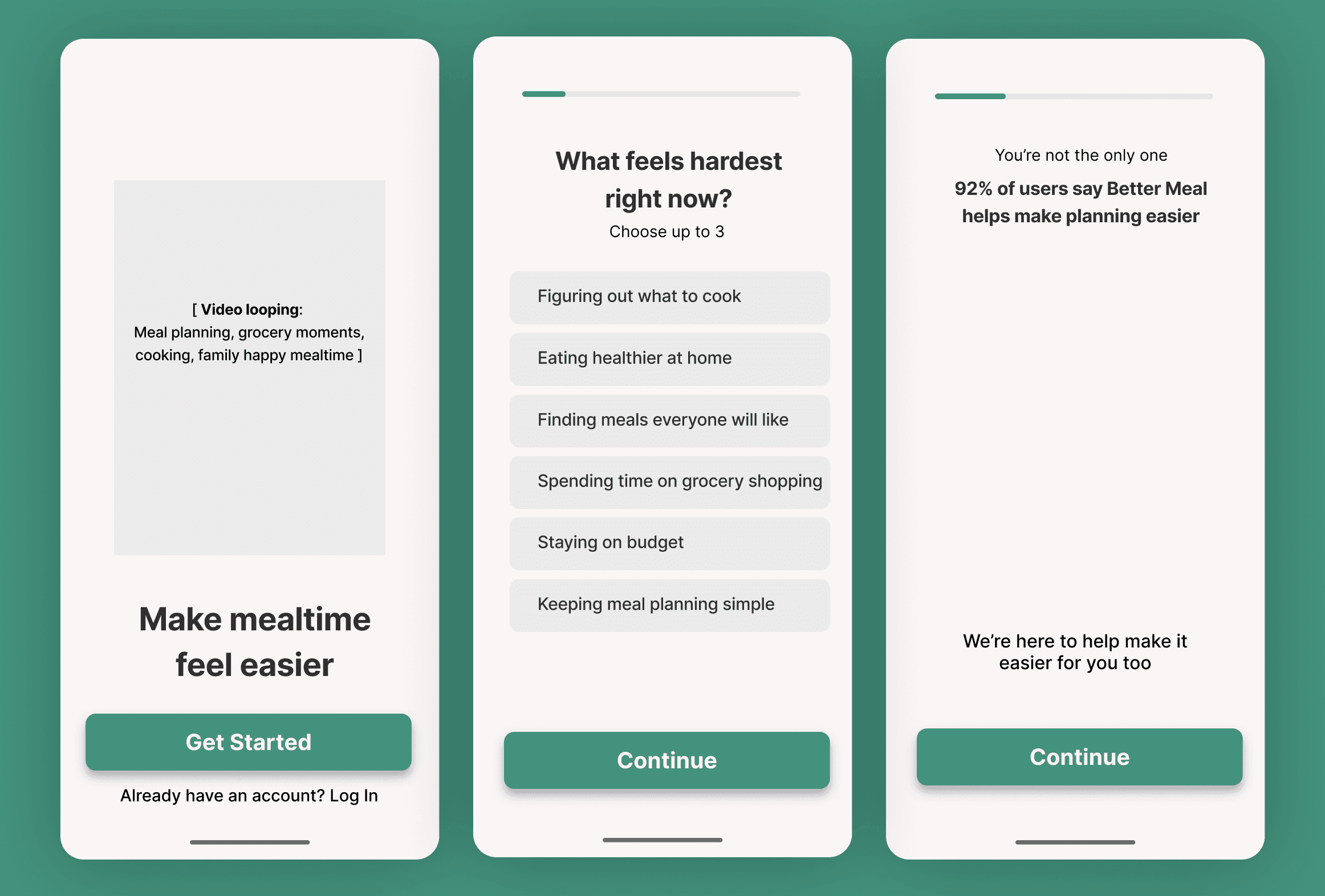
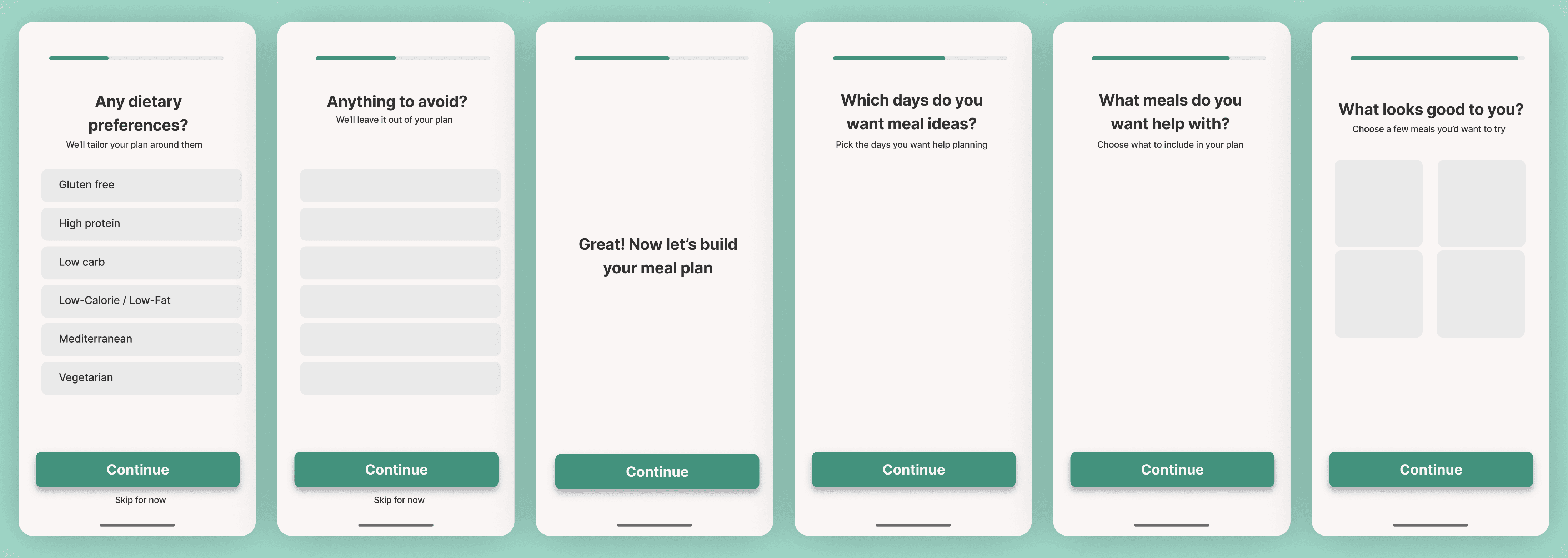
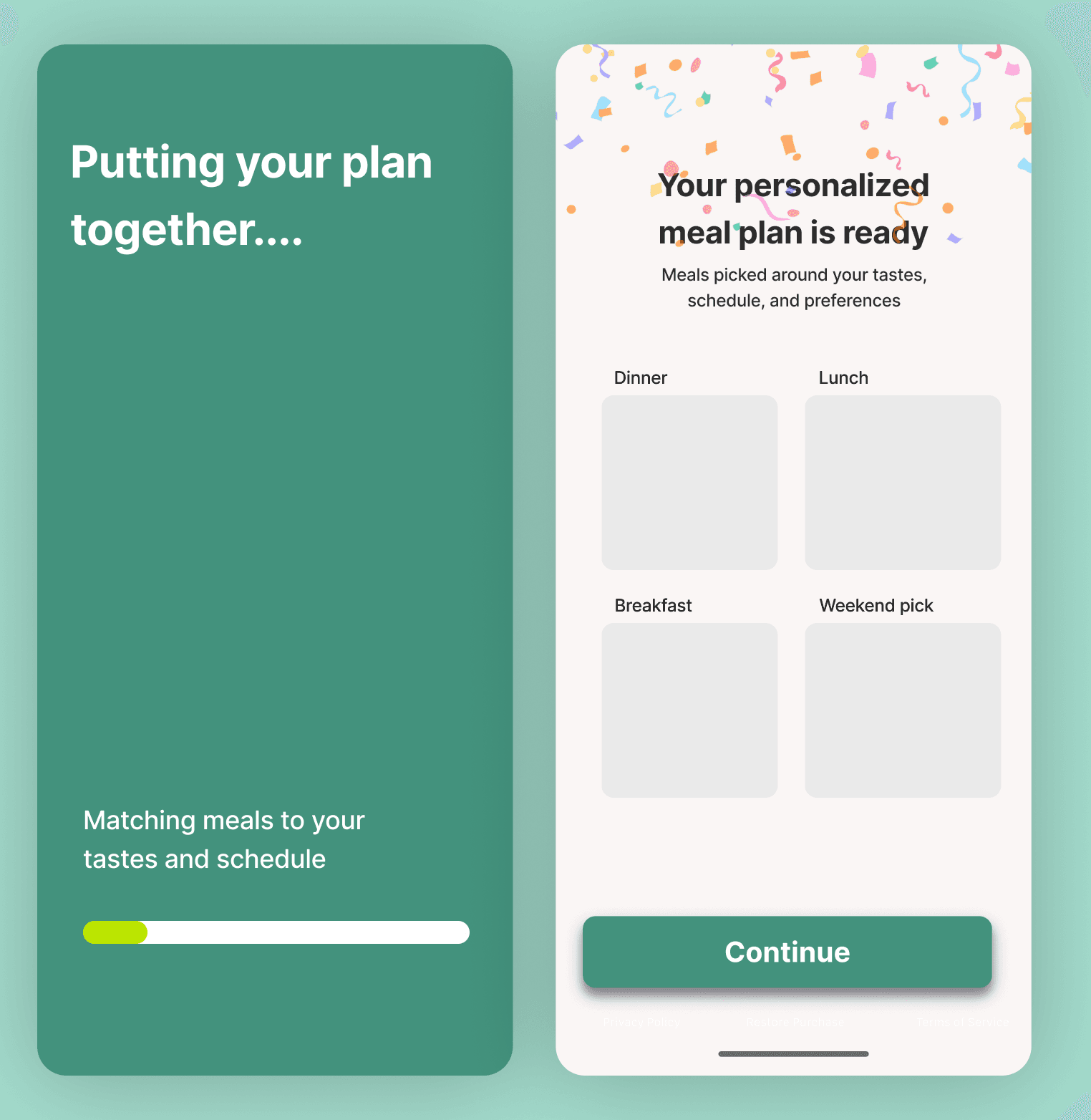
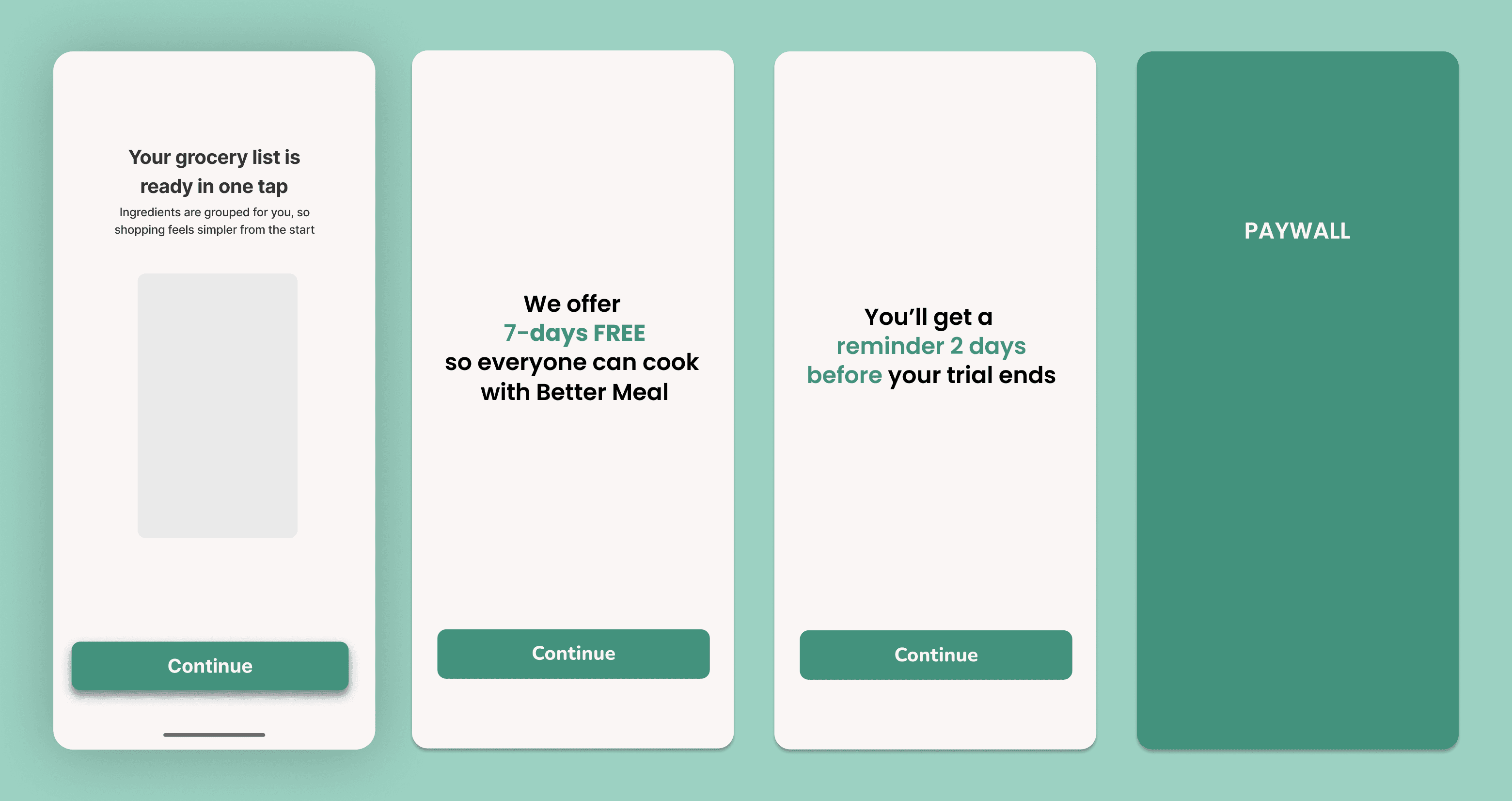
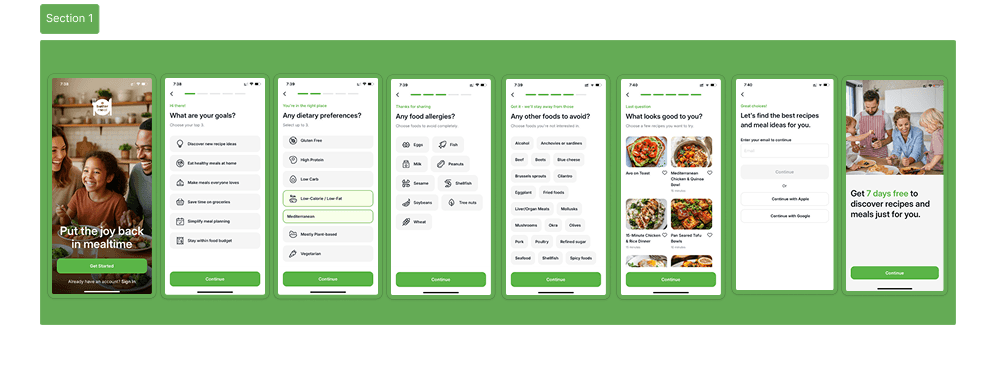
The onboarding asked relevant questions around goals, dietary preferences, allergies, foods to avoid, and meal choices. Structurally, the flow made sense. But the experience moved users toward sign-up, trial, and paywall before they had a strong sense of what their answers were creating.
The audit focused on one question:
Are users experiencing enough value before they’re asked to sign up or pay?
Current onboarding flow
The app collected useful preferences, but the value payoff appeared only after users were asked to sign up or start a trial.
What the funnel revealed
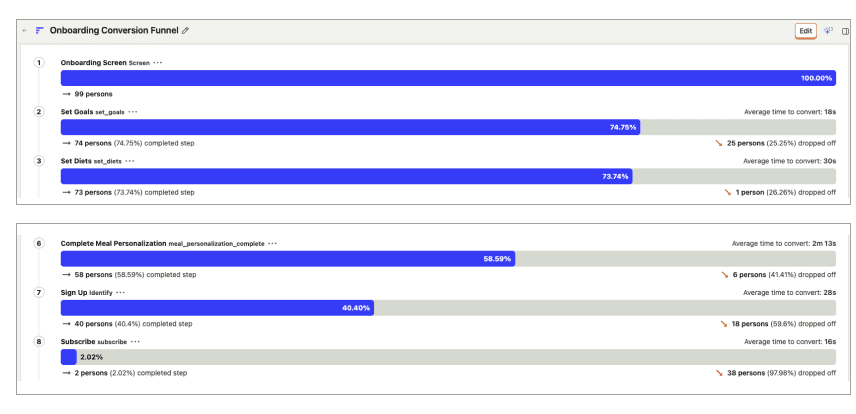
The funnel showed that users were not rejecting the product, they were dropping when the experience asked for commitment.
Three signals stood out:
Funnel signal | What it suggested |
|---|---|
100% → 74.75% on the first screen | The opening screen didn’t give users a strong enough reason to continue |
58.59% → 40.4% from meal personalization to sign-up | Users were willing to personalize, but hesitated when asked to create an account |
2.02% subscription | The paywall appeared before enough perceived value was built |
The takeaway was clear:
Users were willing to give input.
They were not yet convinced enough to commit.
The core diagnosis
The onboarding was doing a lot of asking, but not enough showing.
For a meal-planning app, personalization only becomes meaningful when users can see how their answers shape the result.
If users choose their goals, diets, allergies, and preferred meals, they should quickly feel:
“This is being built around me.”
Without that feedback, onboarding starts to feel like effort.
With that feedback, it starts to feel like progress.
This became the foundation of the recommendation.
f